Sleep, recovery & the considered bedroom
Choosing an Organic Sleep Surface: Certifications, Materials, and Support
An organic label can be a useful starting point, but it is not a complete description of what is inside a mattress—or how it will feel beneath you. The more revealing questions concern which materials are certified, which stage of production the certification covers, and whether the finished sleep surface suits your body. For active sleepers, including golfers, that last point matters: a thoughtfully chosen mattress can support a consistent sleep routine, but no material or label promises athletic recovery on its own.
A guide to reading claims carefully, weighing natural materials, and finding the balance of support, pressure relief, and temperature comfort that makes a bed feel right night after night.
Start with the claim, not the romance of the label
“Organic mattress” sounds like a singular promise, but it can refer to very different things. A mattress may contain certified organic cotton in its cover, organically certified latex in one or more layers, wool marketed as organic, or a combination of natural and conventional materials. In some cases, the word describes a particular ingredient rather than the complete finished product. The distinction is consequential: a certified component does not automatically make every other component organic, nor does it establish that a mattress meets a single universal definition of “organic.”
That does not make certification meaningless. Independent standards can offer a more reliable way to assess materials and production claims than attractive packaging alone. The key is to read the certification as a precise statement about a defined scope. Ask what material is covered, which facility or process is included, and whether the certification applies to a raw material, a component, or the finished article.
For a shopper, this is less about becoming a standards specialist than learning to pause at the right words. “Natural,” “eco,” “green,” and “clean” may sound reassuring, but they do not all indicate the same thing, and some are not certifications at all. Look for the name of the standard, the organization behind it, and information that allows you to verify the claim. If a brand says a mattress is certified, it should be able to explain exactly what that means.
What common certifications can—and cannot—tell you
Different certifications answer different questions. Some focus on the origin and processing of a particular material; others address chemical emissions, restricted substances, or social and environmental practices across parts of a supply chain. A mark on a product should not be treated as a catch-all guarantee. Instead, match the standard to the concern you are trying to understand.
GOLS and latex
The Global Organic Latex Standard (GOLS) is associated with organic latex and sets requirements across defined stages of the latex supply chain. When comparing latex mattresses, ask whether the latex layers themselves are certified, whether the claim relates to the latex used in the specific model you are considering, and whether the manufacturer can provide current documentation. A mattress may include latex without every component of the mattress being covered by that latex certification.
It is also useful to separate the agricultural origin of rubber from the processing of latex into a mattress component. A statement about organically managed rubber plantations and a certification for processed latex are related, but not interchangeable. Clear product information should make the distinction understandable rather than relying on a broad phrase that could be read in several ways.
GOTS and textile components
The Global Organic Textile Standard (GOTS) applies to qualifying textile products and their processing under defined criteria. It is often relevant to cotton fabrics and other textile elements, but the exact scope matters. A certified cover does not necessarily mean that the mattress’s foam, springs, adhesives, or every other component is included under the same standard. Check whether the claim identifies the certified textile and whether it applies to the product or only to a particular material in it.
USDA organic claims
In the United States, the USDA organic program is principally associated with agricultural production and handling. A mattress shopper may encounter a claim concerning the agricultural source of a material, such as cotton or rubber. That can be relevant information, but it does not, by itself, establish that a completed mattress has been certified as a whole under the same program. Ask which ingredient or stage the statement concerns and request details if the wording is unclear.
Emissions and restricted-substance standards
Standards such as OEKO-TEX® or GREENGUARD Gold are often discussed alongside organic claims, but they address different questions. Depending on the specific certification and product scope, they may relate to testing for certain substances or to chemical emissions. They should not be described as proof that a mattress is organic. Conversely, a material being organic does not automatically tell you everything about emissions from every finished-product component. Think of these standards as separate pieces of information, each with its own purpose.
The most useful approach is a small, exacting checklist: name of the standard, certified component, certification holder or product scope, and a way to verify that the status is current. If a company uses the word “certified” without naming the certifier or explaining what is covered, treat the claim as incomplete rather than filling in the gaps yourself.
Look inside: materials shape the experience
Certifications help make material claims more legible, but they do not tell you how a mattress will feel. Construction is the next layer of the decision. A sleep surface may combine latex, cotton, wool, springs, foam, or other materials, each contributing a different balance of contouring, resilience, airflow, and cushioning. Two mattresses with similar labels can behave quite differently because of their layer order, density, thickness, and upholstery.
Latex: responsive rather than slow-sinking
Latex is valued by many sleepers for a buoyant, responsive feel. It can contour to the body while making it relatively easy to change position, though the degree of contour and firmness depends on the latex type and construction. Dunlop and Talalay are distinct manufacturing processes; neither name, on its own, tells you whether a mattress is right for your body. Ask how each layer is configured and whether the manufacturer offers guidance or an exchange option if the initial feel is not suitable.
For golfers and other active people, the practical question is not whether latex is inherently a “performance” material. It is whether the bed lets you settle comfortably, reduces distracting pressure, and feels supportive in the positions you actually sleep in. Responsiveness may appeal to people who move during the night, while a different construction may feel more comfortable to someone who prefers a deeper cradle.
Cotton and wool: the cover and the climate
Cotton commonly appears in mattress covers and other bedding. Its feel depends on how it is woven and quilted, as well as on what lies beneath it. Wool may be used as upholstery or quilted into a cover. It can contribute a soft, dry-feeling surface and is often included in natural mattress constructions for its material properties. Yet neither cotton nor wool can guarantee that an individual sleeper will feel cool. Room temperature, duvet weight, humidity, pajamas, mattress construction, and personal heat sensitivity all play a part.
For the same reason, treat phrases such as “temperature regulating” as an invitation to learn more, not a promise of a particular overnight sensation. Ask how the surface is built, whether it is quilted or layered, and whether the brand’s description refers to a component or the complete mattress.
Springs, foam, and mixed constructions
Some mattresses combine comfort layers with pocketed or other spring systems. Springs can influence lift, movement, and edge feel, while comfort materials determine much of the surface cushioning. Foam can also appear in different forms and perform different roles. A natural-material focus does not remove the need to inspect the full bill of materials. If you are sensitive to particular substances or have specific environmental priorities, ask for a complete component breakdown rather than relying on a short list of headline ingredients.
Support is personal—not a firmness number
Firmness and support are often used as if they mean the same thing. They do not. Firmness describes the initial feel at the surface; support concerns how the mattress holds the body in a comfortable position. A bed can feel plush while still supporting a sleeper effectively, or feel firm without offering the right pressure distribution. Personal comfort depends on body shape, weight, sleep position, mobility, and preference, which is why a single firmness rule rarely works for everyone.
Side sleepers often pay close attention to pressure at the shoulder and hip. Back sleepers may look for a surface that feels evenly supportive without an uncomfortable gap or excessive sinking. Stomach sleepers commonly prefer a feel that limits the sensation of the midsection dropping too deeply. These are starting points for testing, not medical prescriptions. If you wake with persistent pain or have a diagnosed condition, seek appropriate professional guidance rather than expecting a mattress to treat it.
When trying a bed, spend enough time in your usual sleep positions to notice whether pressure builds, whether you feel compelled to shift, and whether the surface feels stable when you turn. A quick showroom test can be useful, but it is not a complete picture of how a mattress will perform at home. Review the trial, layer-exchange, return, and warranty terms before purchase. Policies differ, and the details may matter as much as the materials.
A closer look at a customizable latex option
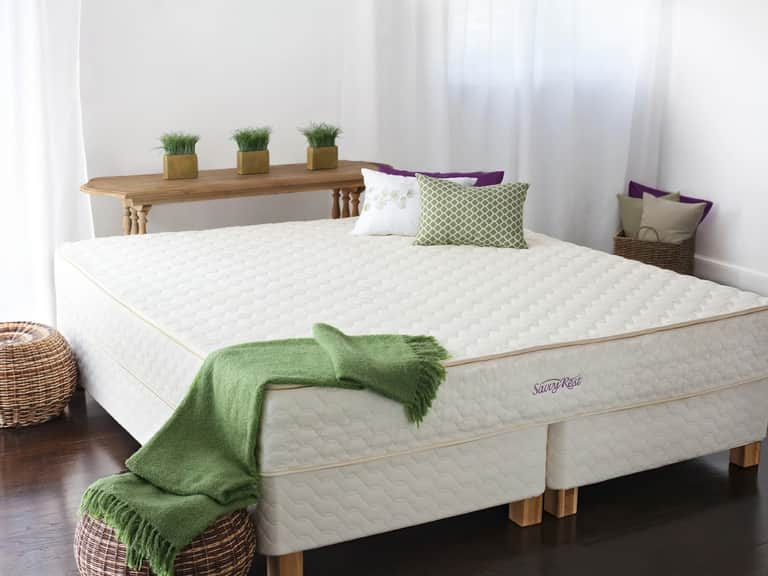
One example of a product whose construction makes configuration part of the decision is the Savvy Rest Serenity Latex Mattress. It is described as a 10-inch mattress with three customizable layers of soft, medium, or firm Dunlop and/or Talalay latex, enclosed in an organic cotton casing with organic wool quilting. The product information identifies its latex as certified organic and describes the cotton and wool components as certified organic; shoppers should confirm the current documentation and the exact scope of each certification when comparing the mattress with other options.
The layered design may be useful to someone who wants to consider more than one firmness arrangement rather than choose a fixed feel from a label alone. The manufacturer lists example configurations and says that Queen and King sizes can be customized by side, a feature that may be relevant to couples with different comfort preferences. A listed 90-day layer-exchange policy offers a way to reassess the configuration, subject to the manufacturer’s current terms. Check those terms directly, including eligibility, costs, and any timing requirements.
This is not a universal answer for every sleeper. The appeal of an adjustable layer arrangement depends on whether the materials and feel suit you, and customization does not remove the importance of trying the mattress under realistic conditions. For a thoughtful comparison, consider the model’s height, base compatibility, care instructions, delivery arrangements, warranty, and the exact materials in the configuration you would receive.
The active sleeper’s question: can a mattress improve recovery?
Rest is part of a wider recovery routine, but the mattress is only one element of it. Sleep duration and regularity, travel, training load, stress, light exposure, and room conditions all influence the opportunity for restorative sleep. A comfortable bed can help create a setting in which sleep is easier to maintain; it cannot compensate for chronic sleep restriction, diagnose a sleep disorder, or guarantee improved sporting performance.
For golfers, the rhythm of play can make consistency surprisingly difficult. Early tee times, late finishes, tournament travel, and changing routines may disrupt normal sleep schedules. A familiar, comfortable sleep surface at home is one part of a more dependable routine. On the road, practical habits—allowing time to wind down, keeping a regular sleep window where possible, and making the room comfortable—may matter more than seeking a particular mattress material.
When choosing a sleep surface with recovery in mind, translate the goal into practical questions. Does the mattress let you sleep without repeated pressure-related waking? Can you change position comfortably? Do you tend to overheat, and does the complete bed setup feel comfortable through the night? These observations are more useful than assuming an “organic” or “athletic” label delivers a performance benefit. If sleep problems are persistent, a mattress comparison is not a substitute for appropriate health advice.
A composed checklist for comparing organic mattresses
Shopping becomes more manageable when the questions are concrete. Bring a checklist, note the answers, and compare like with like. A beautifully phrased product description may set a mood, but the details determine whether the claims and construction make sense for your needs.
- Identify the exact claim. Is the mattress described as organic, made with organic materials, or made with natural materials? These phrases should not be treated as interchangeable.
- Name the standard. Ask which organization or program verifies the claim and whether the certification is current.
- Define the scope. Find out whether the certification applies to the latex, textile, component, manufacturing stage, or finished product.
- Request a material breakdown. Ask what is in the comfort layers, cover, fire barrier, and support core, including materials not highlighted in marketing.
- Assess the feel in your sleep position. Consider pressure relief, ease of movement, and the way your body feels supported—not just whether a firmness number sounds appealing.
- Think about temperature as a whole-bed issue. The mattress, protector, sheets, duvet, room, and personal preferences all contribute to comfort.
- Read the fine print. Review trial periods, layer exchanges, returns, warranty coverage, care requirements, and delivery arrangements before committing.
- Verify instead of assuming. If a label or claim is important to your decision, seek documentation and confirm what it covers.
Bedding layers deserve the same scrutiny
The mattress is the foundation, but the layers above it shape the nightly experience. A protector can guard against spills and everyday wear; a pad can add cushioning. Their materials and construction may change the surface feel, so consider them as part of the complete sleep system. A thick pad may soften the sensation of a mattress, while a poorly fitting layer can shift or bunch. Check the care instructions and fit, particularly if you have a deep mattress or use an adjustable base.
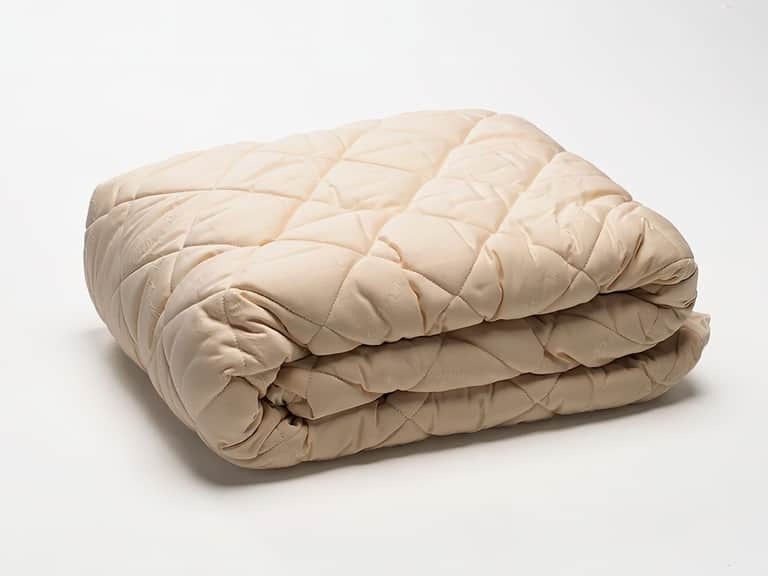
For example, the Suite Sleep Washable Wool Mattress Pad is described as having an organic cotton cover, washable wool fill, and an 18-inch fitted pocket. It is a pad rather than a mattress, so it should be assessed as an additional bedding layer: its role is to provide cushioning and help protect the surface, not to replace the support system beneath it. Confirm fit and care guidance for your own mattress before choosing any pad or protector.
Keep the distinctions clear when comparing products. A mattress certification does not automatically certify the sheets, pad, or protector placed on top of it. If material sourcing is a priority throughout the bedroom, review each item separately and make sure its claims describe the item you are actually buying.
The quieter luxury of an informed choice
Choosing an organic sleep surface is not a contest to find the most impressive cluster of labels. It is an exercise in discernment: know which material matters to you, understand what its certification covers, and then decide whether the mattress itself feels supportive and comfortable. A transparent product description should make those steps easier, not bury them beneath broad claims.
For active sleepers, the most compelling mattress is not necessarily the one with the most elaborate story. It is the one that fits the body, sleeping position, temperature preferences, and everyday routine well enough to make a comfortable night more attainable. Certification can lend confidence to material claims; careful testing can guide the choice of support; consistent habits create the wider conditions for rest. Each has a role, and none needs to promise more than it can deliver.
Take the time to compare. Ask the precise question behind the beautiful label. Then choose a sleep surface for the way it is made and, just as importantly, for the way you sleep on it.